

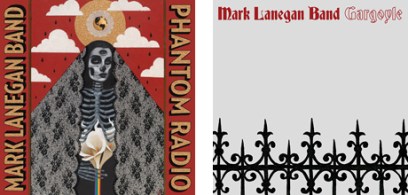
 Mark Lanegan – Phantom Radio & Gargoyle
Mark Lanegan might be my favourite male singer of all time, with a gravelly cigarettes-and-alcohol baritone that sounds so richly lived-in and is deceptively controlled and flexible. And he looks like his voice too – like a person who’s lived through some dark and troubled times. His pipes have become more brittle with years and these days Lanegan sounds less like he’s about to jump out of the speakers and punch you in the face, and his lower register on Gargoyle is almost Leonard Cohen-esque. But his grizzled vocals are no less compelling for that.
These latest two albums continue the experimentation with electronica and synths that first appeared on the 2012 Blues Funeral, while retaining the trademark dark bluesy vibes and oblique lyrics full of macabre gothic imagery and ruminations on sin, death, love and redemption. Business as usual in other words, but as long as his output remains this strong and consistent I’m not complaining. Now bring on the tour!
 Neil Gaiman has become one of my favourite writers over the years and I was happy to get my hands on this latest third collection of short trips into the weird, shadowy country of Gaiman’s mind. It never really occurred to me to compare him to Ray Bradbury, but in fact Gaiman’s short stories have the same effect on me that I had while engrossed in Bradbury’s fiction when a teenager – a pleasantly uneasy sensation of looking at the world in a distorted mirror, or lifting the fabric of reality to find some dark, strange, disturbing things lurking underneath. Gaiman’s imagination is just as boundless, and his voice as a writer is just as distinctive (his books on the whole have a lot more graphic sex, though not in this particular collection).
 Another gem brought to my attention by the History Buffs YouTube channel. Directed by Peter Weir and adapted from nautical historical novels by Patrick O’Brian, Master and Commander unfortunately didn’t make enough money to become a series, which is a shame. Maybe the long unwieldy name put people off; as far as terrible film titles go it’s no Mrs Caldicot’s Cabbage War, but unless you’re a fan of the books it doesn’t really sound like an exciting proposition, which is probably why I skipped the theatrical release myself.
 Loosely based on a novel by Virginia Wolf, Orlando chronicles 400 years through the eyes of its gender-bending hero/heroine, played by Tilda Swinton. Born in the time of Queen Elizabeth I, Orlando is a young nobleman who becomes the favourite of the aging monarch, and is commanded to never wither and grow old.
 I watched this film once 20 years ago, after it swept the 1997 Academy Awards and famously became the object of hatred for Elaine from Seinfeld:
 This big-screen version of Stephen King’s 1,200-page doorstopper is not great, but solid enough, and considering the overall woeful track record of King film adaptations, it can be counted as a success.
 I’ve read quite a few John Grisham legal thrillers over the years. At their best, they’re tightly constructed, entertaining, compulsive page-turners you can’t put down. At their worst, they’re… well like this dud of a book.
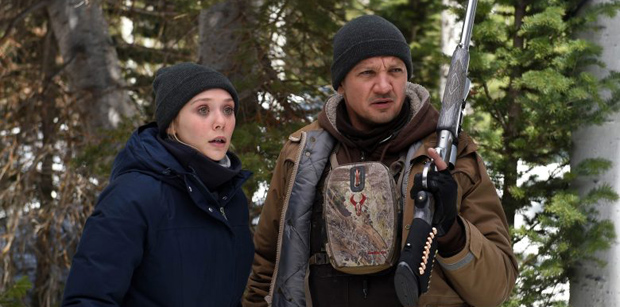 A stark and powerful mystery thriller, with a mood of deep melancholy that stuck with me long after I’ve left the theatre. Part of it is the natural setting, the vast, silent wintry expanses of snow and forbidding mountains of Wyoming, where the story takes place. While beautiful in its own way, this desolate environment makes for a harsh life. Another part is the sorrow and desperation of the people who live on the edge of this wilderness, and the hard-hitting, ugly violence of some key scenes. And there’s the haunting, sparse score from Nick Cave and Warren Ellis.
 I haven’t read anything by Anita Shreve before, but she sure knows how to grab the reader’s attention in the opening chapter. A video tape is brought to the headmaster of a small exclusive New England boarding school, which shows three male students, aged 17 to 19, engaged in sexual acts with a girl. She doesn’t seem to be in any way unwilling, but she is clearly very young, fourteen as it turns out. There’s also a fourth person operating the camera whose identity is never revealed during the scandal that explodes soon after and destroys the lives of the people involved.
