

 “This isn’t going to go the way you think.” This line from Luke Skywalker is a pretty good summary of the film (sadly I have no will and read most of the spoilers beforehand). If The Force Awakens was like a bowl of comforting warm porridge sprinkled with cinnamon and nostalgia, The Last Jedi is proving to be more of a divisive dish. Since I’m on a silly food metaphor track, for me it was a bit like a bowl of salad; some ingredients are tastier than others and occasionally you bite on a piece of raw onion (I can’t stand onion), but it’s overall delicious and there’s an excellent dressing binding it all.
Tag: sci-fi
Edge of Tomorrow – Film Review
 I finally watched the DVD I bought on sale almost three years ago. This is why I prefer to rent movies – if I have a fixed deadline ahead I’ll make time to watch them rather than procrastinate and let the box collect dust. There are just way too many other distractions around. I’m glad I freed it from the plastic wrapping, because the movie was a blast.
I Am Legend – Film Review
 The DVD I rented offered me a choice of the theatrical cut, and the alternative version with the original ending that was scrapped after it was unfavourably received at the test screenings. While I really enjoyed the movie this story of two radically different endings is probably its most interesting aspect. The DVD menu made me feel like a character in a fairytale: shall I take the road on the left, or the road on the right? With the magic of the remote, I watched both endings, and once again marvelled at Hollywood’s willingness to ruin a perfectly fine film.
Spoilers for the endings ahead.
Blade Runner 2049 – Film Review
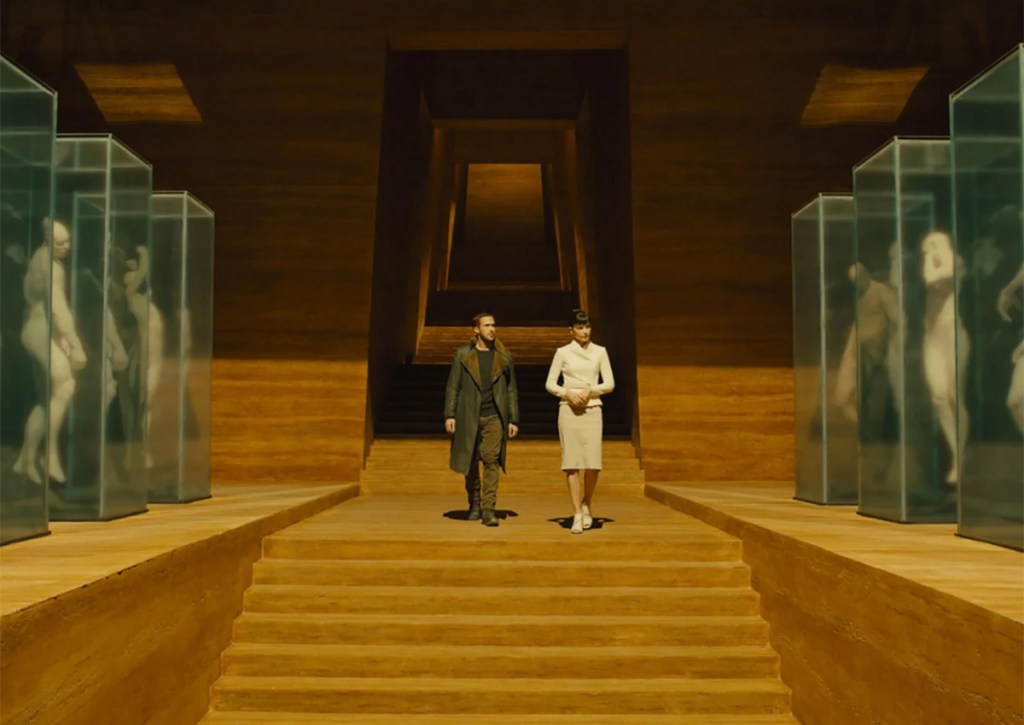
In my mind, the original Blade Runner was a cinematic lightning-in-a-bottle that emphatically did not call for a sequel, so when Blade Runner 2049 was announced I felt rather sceptical about the idea. I can’t say I’ve been entirely converted, but I can definitely say that Denis Villeneuve’s film is worth watching on the big screen for the spellbinding visuals alone.
Trigger Warning by Neil Gaiman – Book Review
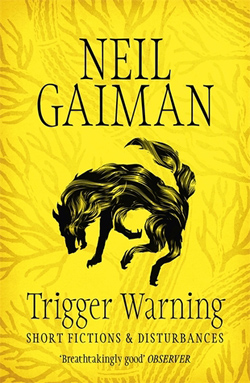 Neil Gaiman has become one of my favourite writers over the years and I was happy to get my hands on this latest third collection of short trips into the weird, shadowy country of Gaiman’s mind. It never really occurred to me to compare him to Ray Bradbury, but in fact Gaiman’s short stories have the same effect on me that I had while engrossed in Bradbury’s fiction when a teenager – a pleasantly uneasy sensation of looking at the world in a distorted mirror, or lifting the fabric of reality to find some dark, strange, disturbing things lurking underneath. Gaiman’s imagination is just as boundless, and his voice as a writer is just as distinctive (his books on the whole have a lot more graphic sex, though not in this particular collection).
The Lobster – Film Review
 The Lobster made me think of Ray Bradbury’s sci-fi short stories I read as a teenager, where some “what if” premise would be taken to an absurd extreme, except that this movie does it with an extra helping of bonkers. If you’re a fan of out-there scenarios, the summary should grab you instantly.
Cloud Atlas – Film Review
 David Mitchell’s magnum opus was the subject of discussion in our most recent book club, so I thought I’d watch the 2012 film adaptation by Lana and Lilly Wachowski and Tom Tykwer.
Passengers – Film Review
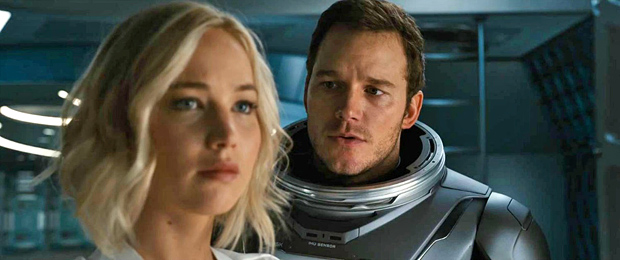 This movie copped a massive backlash upon its release last year, and in all honesty it was practically asking for it, with its grossly misleading trailers and advertising which treated its premise as a twist and in the end made some viewers feel like they received a pretty glittery gift box with a dead puppy inside.
Here’s what the bullshit summary on my DVD rental reads like:
Jennifer Lawrence and Chris Pratt are two passengers onboard a spaceship transporting them to a new life on another planet. The trip takes a deadly turn when their hibernation pods mysteriously wake them 90 years before they reach their destination. As Jim and Aurora try to unravel the mystery behind the malfunction, they begin to fall for each other, unable to deny their intense attraction… only to be threatened by the imminent collapse of the ship and the discovery of the truth behind why they woke up.
Here’s what actually happens in the film (spoilers ahead):
Alien vs. Predator – Film Review
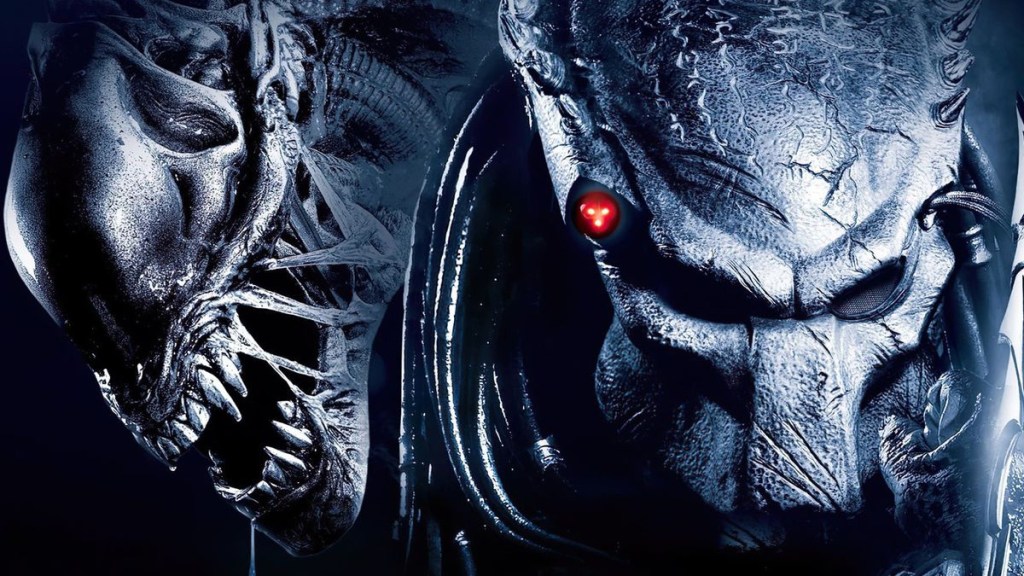
Maybe it’s just the power of lowered (and I mean lowered) expectations, but to my surprise I didn’t hate this much-maligned crossover, and, from a certain perspective, found it a more enjoyable experience than the recent Alien: Covenant.
Brazil – Film Review
 A bonkers trip into the warped and wonderful mind of Terry Gilliam that has nothing to do with a soccer-loving country in South America, and more to do with 1984, George Orwell’s dystopian masterpiece. It’s also set at around Christmas, so I think I’ll be happy to think of it as an alternative Christmas movie a la Die Hard.

