

 Another one for the book club. I’ve actually read this dystopian novel some years ago, but I was happy to revisit Atwood’s nightmarish yet highly imaginative envisioning of the future where messing with nature comes to a no good, very bad end for the human race.
This is not a spoiler, since the book opens in the post-apocalyptic future where the world’s population has been wiped out, and follows what could be the last human survivor who calls himself Snowman. The only other inhabitants are a mysterious new breed of humans called Children of Crake: physically flawless and beautiful, lacking sexual drive and violent impulses, unable to create art or technology, devoid of envy, anger and existential angst. Despite their reverence for Snowman, his chances of survival look pretty grim, with the dwindling supplies and no real weapon to protect himself against the genetically engineered animals now running amok (including some nasty mutant pigs you wouldn’t want to meet in a dark narrow alley).
 I’ve resolved not to buy any more clothes from the second-hand stores to prevent the wardrobe explosion, but I can’t stop buying really cheap books! I very much enjoyed this charming, off-kilter first novel from the Indian author who later won the 2006 Man Booker Prize with The Inheritance of Loss, about a young morose slacker who leaves his home town to take up residence in a guava tree, and becomes an accidental guru. Hilarity and chaos ensue.
 Neil Gaiman has become one of my favourite writers over the years and I was happy to get my hands on this latest third collection of short trips into the weird, shadowy country of Gaiman’s mind. It never really occurred to me to compare him to Ray Bradbury, but in fact Gaiman’s short stories have the same effect on me that I had while engrossed in Bradbury’s fiction when a teenager – a pleasantly uneasy sensation of looking at the world in a distorted mirror, or lifting the fabric of reality to find some dark, strange, disturbing things lurking underneath. Gaiman’s imagination is just as boundless, and his voice as a writer is just as distinctive (his books on the whole have a lot more graphic sex, though not in this particular collection).
 I’ve read quite a few John Grisham legal thrillers over the years. At their best, they’re tightly constructed, entertaining, compulsive page-turners you can’t put down. At their worst, they’re… well like this dud of a book.
 I haven’t read anything by Anita Shreve before, but she sure knows how to grab the reader’s attention in the opening chapter. A video tape is brought to the headmaster of a small exclusive New England boarding school, which shows three male students, aged 17 to 19, engaged in sexual acts with a girl. She doesn’t seem to be in any way unwilling, but she is clearly very young, fourteen as it turns out. There’s also a fourth person operating the camera whose identity is never revealed during the scandal that explodes soon after and destroys the lives of the people involved.

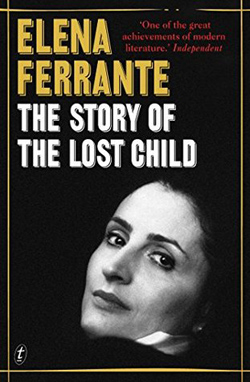 The finale to Ferrante’s four-part Neapolitan Novels chronicling the lives and complicated friendship between Elena and Lila didn’t disappoint and it’s hard to think of a series equally as rewarding and consistently fantastic. It’s impossible to convey, in a review, what makes Ferrante’s writing so extraordinary. On the surface, if you tried to describe the story, it sounds just like any domestic drama – lives of two women as they mature from girlhood into adulthood, going through various highs and lows, grappling with motherhood, making ends meet, becoming successful, growing old. But their experiences and everyday lives are just so incredibly well-drawn, with such degree of richness, texture and psychological insight, in prose that’s so crystal and powerful.
