

 I haven’t read anything by Anita Shreve before, but she sure knows how to grab the reader’s attention in the opening chapter. A video tape is brought to the headmaster of a small exclusive New England boarding school, which shows three male students, aged 17 to 19, engaged in sexual acts with a girl. She doesn’t seem to be in any way unwilling, but she is clearly very young, fourteen as it turns out. There’s also a fourth person operating the camera whose identity is never revealed during the scandal that explodes soon after and destroys the lives of the people involved.
Tag: literature
The Razor’s Edge by W. Somerset Maugham – Book Review
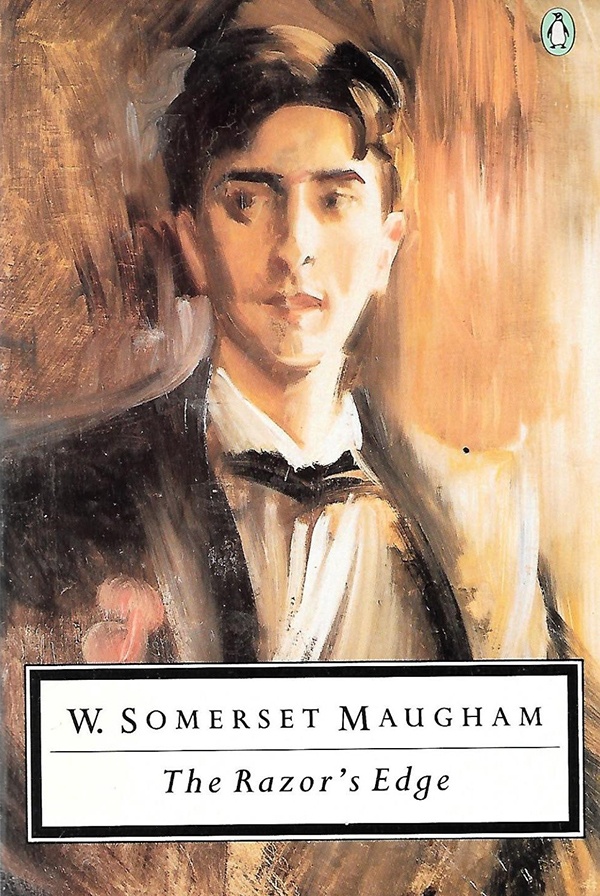
I’ve yet to meet a Maugham novel I haven’t liked; I probably enjoyed this one the least of the four I’ve read so far and I still found it overall excellent.
The Private Patient by P.D. James – Book Review
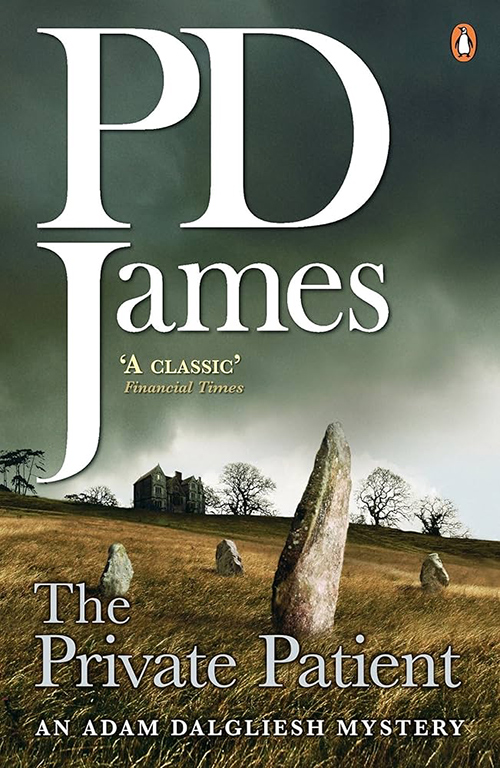
I quite enjoyed the previous P.D. James murder mystery I’ve crossed paths with, but I didn’t have as much success with this last entry featuring Commander Adam Dalgliesh.
The Story of the Lost Child by Elena Ferrante – Book Review
 The finale to Ferrante’s four-part Neapolitan Novels chronicling the lives and complicated friendship between Elena and Lila didn’t disappoint and it’s hard to think of a series equally as rewarding and consistently fantastic. It’s impossible to convey, in a review, what makes Ferrante’s writing so extraordinary. On the surface, if you tried to describe the story, it sounds just like any domestic drama – lives of two women as they mature from girlhood into adulthood, going through various highs and lows, grappling with motherhood, making ends meet, becoming successful, growing old. But their experiences and everyday lives are just so incredibly well-drawn, with such degree of richness, texture and psychological insight, in prose that’s so crystal and powerful.
Quote of the Day
Six principles that make for a good story, according to Anton Chekhov:
- Absence of lengthy verbiage of a political-social-economic nature
- Total objectivity
- Truthful descriptions of persons and objects
- Extreme brevity
- Audacity and originality: flee the stereotype
- Compassion
The Secret History by Donna Tartt – Book Review
 In the first paragraph of the novel, its narrator singles out what he believes to be his ‘fatal flaw’: a morbid longing for the picturesque at all costs. If you can relate to this in any way, at least when it comes to fiction, and can enjoy appalling yet fascinating characters who are not likeable or relatable, The Secret History is a treat, a rather unconventional and mesmerising blend of intellectual ideas and a murder mystery.
Life After Life by Kate Atkinson – Book Review

Looking at the title, I presumed that this was going to be a book about the afterlife, something like The Lovely Bones, but in fact its meaning is one life after another.
This book doesn’t treat death as final: its protagonist, Ursula Todd, dies when she is born in 1910 with the umbilical cord wrapped around her neck. Then in the next chapter and the next life she gets another chance: the family doctor who originally couldn’t be present because of heavy snowfall makes it to her birth, and cuts the cord in time. A few chapters later, five-year-old Ursula and her sister Pamela drown at sea, then in another life they get rescued by a stranger who happens to be nearby. A year later she falls to her death out of the window while trying to rescue a favourite doll, then she is stopped by the kitchen maid before she climbs the windowsill and lives on.
At that point, while enjoying the book, I thought to myself, ok is this going to be like playing a video game where you die and fail a level, then come back and pass the level, then fail the next level and so on? Because that’s going to get old real quick and this is a thick book. But the novel, thank god, was much more inventive than this. The early start-and-stop-and-start narrative is about the more straightforward perils of childhood, but as she grows up and has more autonomy over her choices and actions, Ursula’s many fates take many, wildly different routes.
In one life, a kiss from a visiting American student ends with an abusive marriage, in another, a timely slap prevents a disaster. Romance that happens in one life takes another trajectory in the other, and same people and places play different roles in different chapters. Ursula herself becomes vaguely aware of her own alternate past lives, experiencing strange feelings of déjà vu and inexplicable dread, and a visit to a psychiatrist touches on the nature of time and reincarnation, handily visualised as a snake with a tail in its mouth.
Merely explaining the concept of the novel however does no justice to Atkinson’s empathetic, humorous and vivid writing, which brings to life complex family dynamics and life in England between and including the two world wars. Ursula’s family is comfortably wealthy and live just beyond the north London, in a leafy area not yet swallowed by the encroaching suburbs. While Ursula herself never quite gels into a fully realised character, probably because of her ever-changing life course, the novel has a rich supporting cast, of which Ursula’s snobbish and caustic mother Sylvie and erratic, free-spirited aunt Izzie stand out the most. The details of wartime London and its blitz horrors are harrowing and authentic, though the book feels less convincing when it travels over to the continent in a life where Ursula ends her days in the 1945 Berlin instead. Atkinson knows her England through and through, Germany on the other hand feels a lot more sketchy.
If I continued the earlier video game comparison, World War II is the unbeatable big boss of Ursula’s life; even when she makes out of it alive the tragedies it visits on her family leave it mangled forever. In the opening chapter set in the 1930s Germany, Ursula dies while trying to assassinate Hitler, and the closest the novel gets to “what it all means” is the implication that Ursula’s ultimate goal is preventing the war from happening. But the book remains rather vague on this account; there’s even an intriguing remark by one of the characters that perhaps a great evil happens in order to prevent an even greater evil (this in fact made me half-expect a version of Ursula’s life where Hitler dies but the future turns out to be even worse than WWII, but I guess this would be getting too much into science fiction turf).
Despite this lack of clear resolution, this is a remarkable, rich, haunting book that I’d probably want to re-read down the track.
The Girl on the Train by Paula Hawkins – Book Review
 This was one of those mystery/thrillers where you go, hmm I think I can see where the story is going, but there are still plenty of pages left, so hopefully there’s some totally unexpected juicy twist in store… oh wait there isn’t. So then the remainder of the book is just waiting for the main character to connect all the dots and for the story to roll out, which is rather tedious. I don’t usually play Sherlock and try too hard to solve the crime or predict the plot of the books and movies – in most cases I prefer to sit back and go along with the story, and I rather like being surprised. Here though the red flags are so obvious I couldn’t help but guess the culprit long before the heroine does.
Those Who Leave and Those Who Stay by Elena Ferrante – Book Review
 Surprisingly, I got through the third entry in Ferrante’s Neapolitan Novels much quicker than the first two – maybe because of greater familiarity with her style. In this novel, Elena/Lenú and Lila, the two girls we first met as young children in My Brilliant Friend, are now grown women entering their third decade.
The Story of a New Name by Elena Ferrante – Book Review
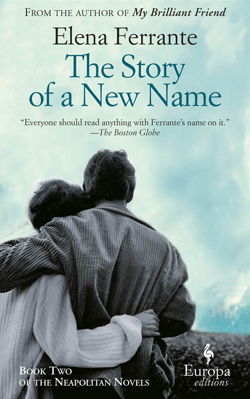 The second entry in Ferrante’s Neapolitan Novels is just as good as the first one, if not better. It continues to chart the stories of Elena and Lila, the two young girls from Naples, as they enter adulthood, and the course of their relationship which is far too complicated to be referred to as friendship.
 yggdrasille.com