
“A reader lives a thousand lives before he dies. The man who never reads lives only one.”
– George R.R. Martin

– George R.R. Martin
I ended up reading this book twice, simply because I didn’t feel like I gave it justice the first time around: I read it in a terribly rushed, haphazard manner and this is simply not a book to read in 15-minute bites. Plus I have a bad habit where sometimes I get impatient about two thirds into the reading, and start scanning and skipping through the final pages in a race to the finish.
– from Small Gods by Terry Pratchett

It didn’t occur to me until later, but this book bore very strong similarities to My Sister’s Keeper, probably Picoult’s best-known novel. Let’s see, it’s about a family with a special needs child, a mother who is well-meaning but blinded to some truths about her family in her single-mindedness, another daughter who feels neglected and misunderstood, a father who is caught in the middle, a lawyer who has her own side story; there’s a court case and a big shock ending. Still, as the legal battle at the centre is completely different, it wouldn’t be fair to call it a rehash.


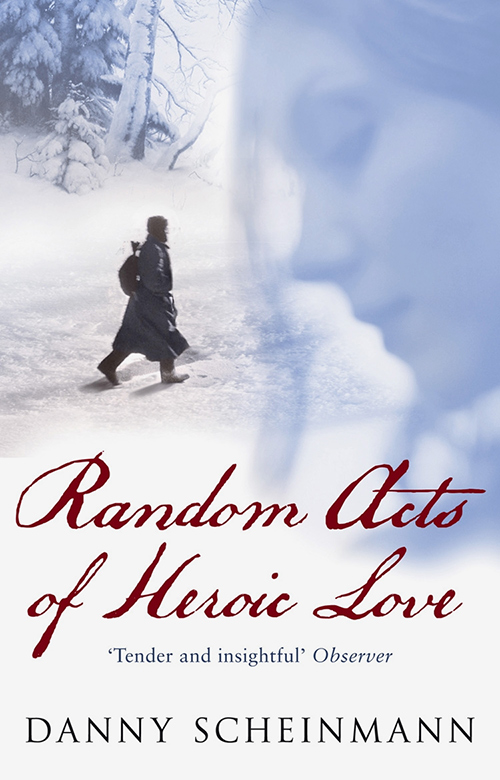
This book was rather frustrating. It started off with a bang – in 1992, somewhere in South America, a young man named Leo wakes up in a hospital to find out that his girlfriend Eleni was killed in a bus accident. He has no memory of the crash, and is utterly overwhelmed with grief. This story then alternates with something completely different – in 1914, a young Jewish man named Moritz, who lives in what would later become Poland, is off to the war to fight for the Austro-Hungarian empire, leaving behind a girl he loves. So the book is about these two men in different eras, whose lives revolve around the memories of the women, and who go on quests spurred on by love – a more physical one in Moritz’s case, a more spiritual one for Leo.
I love The Master and Margarita by Bulgakov, and the character of Woland, who is basically the Devil though never explicitly referred to so. I always liked this speech of his about the place of evil in the grand scheme of things, and the way it’s inseparable from good:
You spoke your words as though you denied the very existence of the shadows or of evil. Think, now: where would your good be if there were no evil and what would the world look like without shadow? Shadows are thrown by people and things. There’s the shadow of my sword, for instance. But shadows are also cast by trees and living things. Do you want to strip the whole globe by removing every tree and every creature to satisfy your fantasy of a bare world?
 Reading this book was like spending a few hours in the company of a frank, intelligent, funny, opinionated friend whose insights make you laugh, nod and go ‘oh hold on there’ in equal measure; the only drawback was that, being a passive reader, you can’t start a discussion. I didn’t necessarily agree with every point made in the book, but then Gay makes it pretty clear that this is simply her opinions, not gospel, and acknowledges her own biases and contradictory feelings on certain issues – like singing along to the catchy-as-hell tunes while loathing their lyrics that demean women.
 yggdrasille.com