

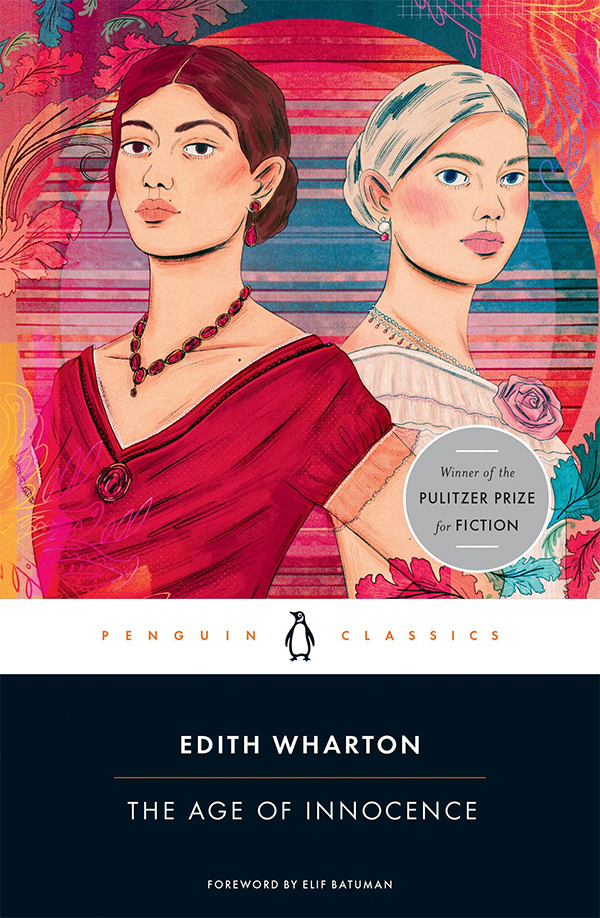
It’s been a while since I read classic literature, and this elegant novel about personal desires clashing against societal expectations in 1870s New York was a treat.
This book must have sat untouched on my shelves for over ten years; sometimes you buy a classic with the best intentions and just never get around to it. It couldn’t have helped that my previous experience with the early 20th-century American literature was Henry James’ The Wings of the Dove, which felt like so much hard work I gave it up after twenty pages. I needn’t have worried about The Age of Innocence: it has some of the most sublime and perfectly crafted prose I read in a while, still accessible to a modern reader more than a century later.
Published in 1920, The Age of Innocence is a portrait of the insular and rigid aristocratic society, dissected with an almost anthropological eye from the distance of nearly fifty years. It’s centred on Newland Archer, a young lawyer from a wealthy and respected family inhabiting the upper echelons of New York. On the surface, he leads a perfect life that’s about to be crowned by a perfect engagement. Archer’s fiancée-to-be is May Welland, one of the prettiest young women in his social set, and an embodiment of all things decent, sweet and virtuous.
Into this perfection comes May’s cousin, Countess Ellen Olenska, who recently abandoned her brutish European husband and returned to her native New York. She creates quite a stir in a society that abhors a scandal above all else, and her family likewise cause murmurs by publicly supporting her. To Archer, Ellen and her sophisticated, bohemian, free-spirited ways are exotic and irresistible. Despite his traditional upbringing and placid exterior, Archer has a hidden longing for a richer, less conventional life, and the more time he spends with Ellen, the more she seems to embody these emotional and artistic riches and desires.
Inevitably, this new powerful attraction makes Archer question his future with May, even as he goes through the rituals of a wedding and settles into what increasingly feels like a bland life with a charming, worthy, utterly flavourless companion:
As she sat thus, the lamplight full on her clear brow, he said to himself with a secret dismay that he would always know the thoughts behind it, that never, in all the years to come, would she surprise him by an unexpected mood, by a new idea, a weakness, a cruelty or an emotion. She had spent her poetry and romance on their short courting: the function was exhausted because the need was past.
This all sounds like the making of a classic romantic triangle and a tragic story of unconsummated love, but Wharton’s novel is so much more than that. I really enjoyed the satirical angle of the book and the witty study of a world that’s both glamorous and suffocating, detesting unpleasantness and “scenes” of any kind, operating on unspoken rules and often cruel to those who break them. Wharton’s attitude to the world she’s depicting is however harder to discern than you’d assume. One could interpret the novel’s title as ironic, but it’s also not a stretch to imagine that someone living through the instability and flux of the 20th century could look back and see something appealing in the stability of Archer’s world, repressed as it was.
I already mentioned the exceptional quality of writing, which is matched by the depth of Wharton’s characterisation and psychological insight. The emotional affair between Archer and Countess Olenska and the struggle with the opposing forces in their lives naturally takes most of the attention, and it was tempting to dismiss May as an innocent and dull obstacle. By the end, she turns out to be a far more astute character than initially supposed, and far more skilled at the art of high society than you’d suspect from looking at her through Archer’s eyes.
I already loved the novel before its melancholy epilogue, but for me it sealed its greatness. In this last stretch, it finds a whole new different way of reflecting on the tension between duty and personal freedom, and ends on a note so sad and perfect I’d read the book all over again just for its sake.

