

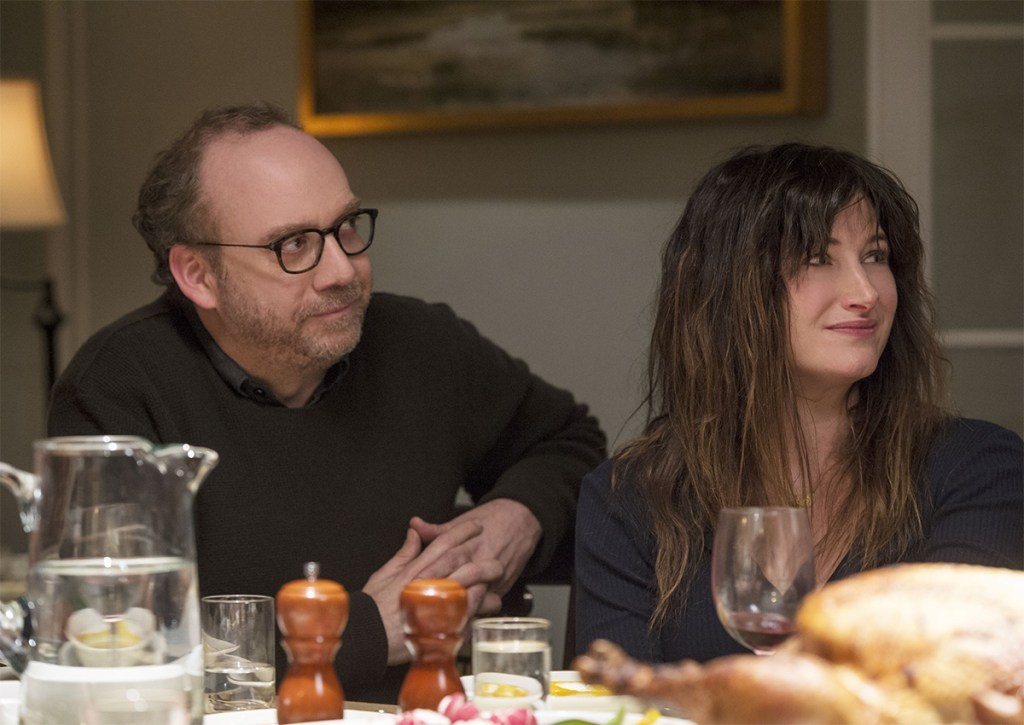
Infertility is a topic that rarely if ever makes it into the movies, but this bittersweet comedy-drama about a middle-aged couple trying to conceive goes all in on the difficult and sensitive subject, with intelligence and humour.
Rachel (Kathryn Hahn) and Richard (Paul Giamatti) are an artsy New York couple in their forties; she’s a writer struggling with the latest novel, he’s a former theatre director who now runs a pickle-making business. The two are dying to become parents, but Rachel is past peak fertility, and Richard only has one testicle that happens to be blocked. As the movie opens, they’re already emotionally and financially spent after many failed IVF cycles, but not ready to give up just yet. They’re also casting their net wide, flirting with adoption and surrogacy (their latest attempt has ended horribly, with a potential surrogate mother turning out to be a fake).
The ongoing baby quest has left its mark. Rachel is a bundle of nerves, anxious and overwrought from more than just the hormones pumped into her body. Richard is trying to be patient and supportive, but the sheer exhaustion often makes him snap. They haven’t had sex for months and their marriage has become consumed by the attempts to have a baby.
After yet another failed treatment, things take a turn when the couple ask Richard’s step-niece Sadie (Kayli Carter) to be their egg donor. Sadie is a bright 25-year-old college dropout and a budding writer, who adores her step-uncle and aunt and their lifestyle, complete with a bohemian apartment where every window sill is covered with piles of books. She also finds herself at crossroads in life, and gives her agreement perhaps too readily, lacking the emotional maturity to fully understand the implications of what she’s signed up for. Sadie’s decision also causes tensions within the family, particularly with her mother Cynthia (Molly Shannon), who earlier on accuses Rachel and Richard of being fertility junkies.
Writer-director Tamara Jenkins doesn’t sugarcoat the long, repetitive, frustrating slog of the IVF. Other movies might use infertility as a mere premise that gets quickly glossed over, but Private Life really dives into the nitty-gritty of the procedures and endless brain-numbing paperwork. It would have been pure misery if it didn’t manage to mine comedy from the absurdity and awkwardness of the situation, even if the laughs often come with a wince. Jenkins’ script also brings up the conflicting messages fed to women by the modern society, which encourages them to pursue careers while downplaying the brutal biological trade-offs where fertility is concerned.
Jenkins’ movie is also an intimate look at a marriage under stress, helped by the astute writing and lived-in, naturalistic performances by the two leads. There are not many actors better at conveying bone-tired dejection than Paul Giamatti, who is equal parts a comical sad-sack and a tragic portrait of a man beaten down by disappointment. It took me a tad longer to warm up to Hahn’s Rachel, who I initially found grating despite the fact that her brittleness and barely contained rage are completely understandable. Moments of vulnerability and the frayed affection still present in Rachel and Richard’s marriage did win me over by the end. It helps that Giamatti and Hahn really do look like the characters they’re playing, without a whiff of Hollywood gloss about them.
Without spoiling anything, there’s also a refreshing lack of gloss about the movie’s ending, with a perfect final shot that ends things in an ambiguous but hopeful manner.
This modest indie was quietly released on Netflix a few years ago without much fanfare; I only found out about it from another blog review and its frankly bland title probably wouldn’t have attracted my attention while scrolling for things to watch. It’s a shame because it definitely deserves more love and attention. It makes me wonder how many more good small-scale movies are buried in the streaming content sludge.
 yggdrasille.com