

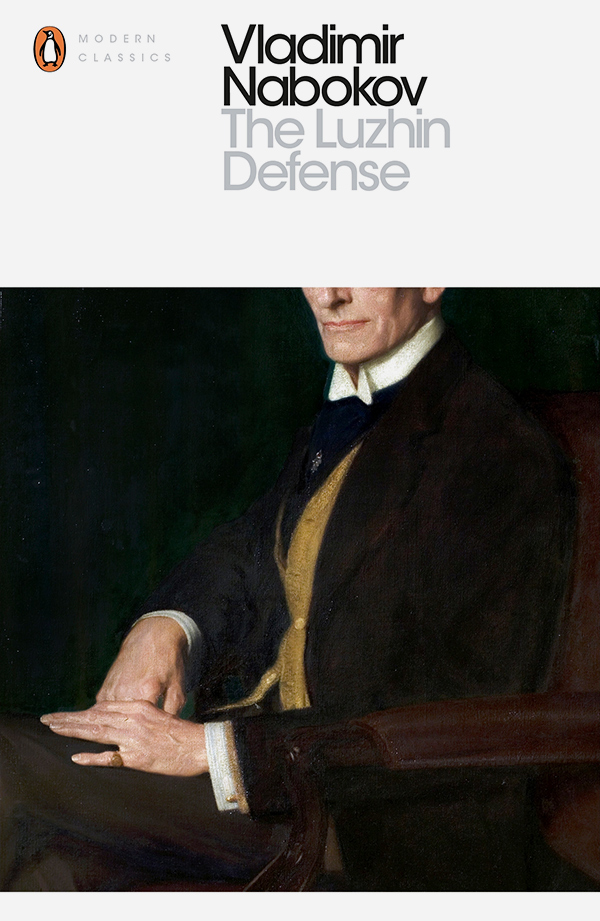
This is a rare book that I loved mainly because it made my brain tingle with its brilliant, beautiful prose, even if I found it emotionally chilly and distant.
Though I read Lolita while still in Russia, this is my first Nabokov novel as an adult. Funnily enough, I read Lolita in Russian translation, and now I went with an English translation for a book originally written in Russian, though apparently it was translated in collaboration with Nabokov himself. As someone who adores language and loves a great stylist, I found Nabokov’s layered, precise, playful writing simply captivating, and his vocabulary humbling; I’d like to think of mine as fairly decent, but I lost count of unfamiliar words in this book. He has a way of making long, complicated sentences feel uncluttered, and some unusual, creative word choices.
Luzhin of the title (we only find out his first name in the second-last sentence) is a former chess prodigy, now a revered Grandmaster who never managed to become a world champion. We’re first introduced to Luzhin as a lonely, awkward boy, with a difficult familial situation at home that he only vaguely comprehends. His life is never the same when he discovers chess and quickly reveals an extraordinary talent that both gratifies and dismays his father, a mediocre writer of children’s books. I found Luzhin Snr and his growing ambivalence towards his son one of the most interesting aspects of the novel, even if he doesn’t hang around for too long.
For Luzhin, the world of chess, where he can be in full control as a master of invisible chess forces, is the real world. Outside of the black-and-white confines of a chess board, his connection to the material world and other people is tenuous at best. He is overweight, uncouth, socially inept, and unable to maintain any kind of normality. Despite this, his yearning for human connection comes through in his clumsy courting of a young soft-hearted woman, who is rather drawn to Luzhin’s air of a mysterious genius. Being a kind of woman who finds purpose in compassion, she sticks by Luzhin despite the protestations of her parents, understandably horrified by this match.
Meanwhile, a looming chess game with the current world champion takes Luzhin to the brink of insanity. The intense encounter with his arch-rival and the complete mental breakdown that follows is probably the peak of the novel, as Luzhin becomes completely detached from reality. Nabokov’s mastery of language make these moments feel incredibly vivid and immersive. Though I never suffered anything to this degree, I went through a period of de-realisation brought on by anxiety, and nothing I’ve read before captured this feeling of moving through the world as if it was populated by ghosts. After his breakdown, Luzhin is faced with the grim choice: he must either give up the only thing that gives his life meaning, or be completely consumed by it.
I’ve heard Nabokov’s detractors call him cold and clinical, and going by this book it’s a fair criticism. If you’re not moved by the aesthetic beauty of his prose and virtuosic writing, it can be hard to engage with The Luzhin’s Defense on an emotional level. No one here, including Luzhin himself, is especially likeable; I found him pitiable but hardly endearing. Also, while I wouldn’t describe Nabokov’s attitude to his characters as cruel or contemptuous, I also haven’t detected much warmth. Would I re-read this book based on writing alone, absolutely.
 yggdrasille.com